Ball Screw: Types, Working, Applications and Selection Guide
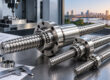
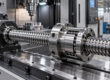
A Ball Screw is a precision mechanical component used to convert rotary motion into smooth and accurate linear motion. It is commonly used in CNC machines, automation systems, robotics, machine tools, packaging equipment, and other industrial applications where low friction and precise movement are required.
Unlike a conventional lead screw, a ball screw uses recirculating balls between the screw shaft and nut. This reduces sliding friction and helps provide smoother motion, better efficiency, and improved positioning accuracy.
Shubh Traders supplies different ball screw types including Rolled Ball Screws, Ground Ball Screws, and Stainless Steel Ball Screws for industrial and precision-motion applications.
What Is a Ball Screw?
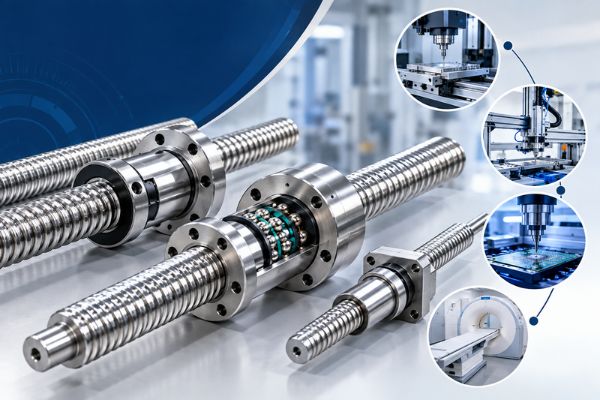
A ball screw consists mainly of a threaded screw shaft, a ball nut, and recirculating steel balls.
When the screw rotates, the balls roll between the screw shaft and nut raceways. This allows the nut to move linearly along the screw with significantly less friction than a conventional threaded screw.
The main components include:
- Ball screw shaft
- Ball nut
- Recirculating steel balls
- Ball return system
- Wipers or seals in selected designs
- Support bearings
Ball screws are commonly selected where accurate linear positioning, repeatability, and efficient motion are important.
How Does a Ball Screw Work?
The working principle of a ball screw is simple.
When rotational force is applied to the screw shaft, the balls roll through the helical grooves between the shaft and nut. As the balls circulate, the nut moves forward or backward along the screw.
After reaching the end of the loaded path, the balls return through a recirculation mechanism and repeat the cycle.
This rolling contact helps reduce direct metal-to-metal sliding.
As a result, ball screws can provide:
- Smooth linear movement
- Lower friction
- High mechanical efficiency
- Better positioning accuracy
- Reduced wear
- Good repeatability
- High load capacity
Ball Screw vs Lead Screw
Ball screws and lead screws both convert rotary movement into linear movement, but their operating methods are different.
| Feature | Ball Screw | Lead Screw |
|---|---|---|
| Contact Type | Rolling contact | Sliding contact |
| Friction | Low | Higher |
| Efficiency | High | Lower |
| Accuracy | High | Moderate |
| Backlash | Can be very low | Usually higher |
| Speed Capability | Higher | Generally lower |
| Load Capacity | High | Application dependent |
| Common Use | CNC, robotics, automation | Manual systems, light machinery |
A ball screw is usually preferred where precision, efficiency, and repeated movement are important.
Main Types of Ball Screws
Shubh Traders offers several ball screw categories for different industrial requirements.
Rolled Ball Screw
Rolled ball screws are produced using a thread-rolling process.
They offer a practical combination of smooth motion, performance, and cost efficiency.
Rolled ball screws are commonly used in:
- Packaging machinery
- Automation equipment
- Material handling systems
- General industrial machinery
- Light and medium-duty CNC machines
Shubh Traders describes its rolled ball screws as suitable for automation, packaging equipment, and medium-precision applications.
Ground Ball Screw
Ground ball screws are manufactured using a precision grinding process.
This provides tighter tolerances and higher positional accuracy compared with many standard rolled designs.
Ground ball screws are commonly used in:
- CNC machining centers
- Precision machine tools
- Robotics
- Aerospace equipment
- Semiconductor machinery
- High-accuracy automation
Shubh Traders lists its Ground Ball Screw range with accuracy grades from C0 to C5, diameter ranges from 10 mm to 120 mm, and published efficiency of 90–95% for the referenced product range.
Stainless Steel Ball Screw
Stainless steel ball screws are used where corrosion resistance is important.
They can be suitable for environments involving moisture, humidity, clean areas, or exposure to conditions where standard steel components may corrode.
Common applications include:
- Food-processing machinery
- Medical equipment
- Semiconductor systems
- Laboratory equipment
- Outdoor machinery
- Humid industrial environments
Shubh Traders offers stainless steel ball screw configurations in both rolled and ground types.
Benefits of Using a Ball Screw
High Mechanical Efficiency
Rolling contact between the balls, shaft, and nut helps reduce friction.
This allows more input torque to be converted into useful linear movement.
Smooth Motion
Ball recirculation provides smooth movement with lower resistance compared with sliding screw mechanisms.
High Positioning Accuracy
Precision ball screws are suitable for machinery where repeatable and controlled movement is important.
Low Backlash Options
Preloaded ball nut arrangements can reduce backlash and improve positioning accuracy.
High Load Capacity
The load is distributed across multiple balls inside the nut.
This allows ball screws to support significant axial loads when properly selected.
Long Service Life
Correct lubrication, mounting, alignment, and contamination control can help provide long operating life.
Applications of Ball Screws
Ball screws are widely used across modern manufacturing and automation systems.
CNC Machines
CNC machines require controlled and repeatable axis movement.
Ball screws are commonly used on:
- X-axis
- Y-axis
- Z-axis
- CNC lathes
- Milling machines
- Machining centers
Ground ball screws are often selected for higher-precision CNC applications.
Industrial Automation
Ball screws are widely used in automated machinery where repeatable linear motion is required.
Applications include:
- Pick-and-place systems
- Assembly machinery
- Automated production lines
- Material positioning systems
- Linear actuators
Robotics
Robotic equipment may use ball screws for controlled linear movement, lifting, positioning, and actuator mechanisms.
Packaging Machinery
Packaging systems use repeated linear movements for:
- Filling
- Sealing
- Cutting
- Feeding
- Positioning
- Product handling
Rolled ball screws can be suitable for many medium-precision packaging applications.
Medical Equipment
Precision linear motion is important in selected medical and laboratory systems.
Ball screws may be used in diagnostic machines, positioning equipment, and controlled-motion systems.
Aerospace Equipment
High-precision ground ball screws can be used in aerospace mechanisms where positioning accuracy and repeatability are important.
Semiconductor Equipment
Semiconductor production machinery often requires highly controlled movement and low backlash.
Precision ball screws may be used in positioning and automation systems.
How to Select the Right Ball Screw
Selecting the correct ball screw requires more than choosing only the diameter.
Several technical factors should be considered.
Load Capacity
Calculate the axial load that the ball screw must support.
Consider both:
- Static load
- Dynamic load
Shock and acceleration loads should also be included.
Screw Diameter
The screw diameter affects:
- Load capacity
- Rigidity
- Critical speed
- Buckling resistance
Longer screws and higher loads may require a larger diameter.
Lead or Pitch
Ball screw lead is the linear distance travelled by the nut during one full rotation of the screw.
For example, a higher lead provides faster linear movement per revolution.
A smaller lead may provide finer positioning control.
Accuracy Grade
Accuracy requirements vary by machine.
General automation may not require the same precision as a CNC machining center or aerospace system.
Ground ball screws are commonly selected where very high accuracy is required.
Operating Speed
Ball screw speed should remain within the safe limits for:
- Critical shaft speed
- Ball circulation system
- Lubrication
- Nut design
Excessive speed can create vibration and reduce service life.
Backlash Requirement
Applications requiring accurate positioning may need low-backlash or preloaded ball nuts.
Stroke Length
The total required travel distance affects ball screw length and support arrangement.
Mounting Arrangement
Different end-support combinations affect rigidity and permissible speed.
Common arrangements include:
- Fixed–fixed
- Fixed–supported
- Fixed–free
- Supported–supported
What Is Ball Screw Preload?
Preload is an internal force applied to reduce clearance between the ball nut and screw.
It can help:
- Reduce backlash
- Improve rigidity
- Improve positioning accuracy
- Improve repeatability
However, excessive preload can increase friction, heat, and wear.
The correct preload should therefore be selected according to the machine application.
Importance of Ball Screw Lubrication
Proper lubrication is essential for ball screw performance.
Lubrication helps:
- Reduce friction
- Prevent metal wear
- Control heat
- Protect against corrosion
- Improve service life
- Maintain smooth motion
Both grease and oil lubrication can be used depending on speed, load, operating environment, and manufacturer recommendations.
Common Causes of Ball Screw Failure
Ball screws can fail prematurely if installation or operating conditions are incorrect.
Common causes include:
- Poor lubrication
- Contamination
- Misalignment
- Excessive load
- Excessive operating speed
- Incorrect preload
- Poor support bearing installation
- Shock loading
- Damage during mounting
- Corrosion
Proper preventive maintenance can significantly reduce these risks.
Signs That a Ball Screw Needs Inspection
A ball screw should be inspected when the machine shows:
- Increased backlash
- Abnormal noise
- Vibration
- Rough movement
- Poor positioning accuracy
- Excessive heat
- Reduced repeatability
- Uneven movement
- Increased motor load
Replacing the ball screw without identifying the root cause may result in repeated failure.
Ball Screw Supplier in Ahmedabad
Industrial buyers should select ball screws according to the required accuracy, load, stroke, speed, environment, and machine design.
Shubh Traders is based in Ahmedabad and supplies motion-control and industrial bearing products including ball screws, linear guideways, shafts, couplings, and bearings. The company states that it has more than 25 years of experience in the motion and bearing industry and supplies products from multiple established international brands.
Its ball screw portfolio includes:
- Rolled Ball Screws
- Ground Ball Screws
- Stainless Steel Ball Screws
These product categories allow industrial customers to choose solutions for general automation as well as higher-precision machinery.
Why Choose Shubh Traders for Ball Screws?
Shubh Traders supports industrial customers with a broad range of motion and bearing products.
Key strengths include:
- 25+ years of industry experience
- Multiple ball screw types
- Rolled and ground options
- Stainless steel ball screw availability
- Linear guideways and bearings from one supplier
- Motion-control product range
- Ahmedabad-based supply support
- Solutions for CNC and industrial automation applications
FAQ – Ball Screws
A ball screw is used to convert rotational motion into controlled linear movement. Common applications include CNC machines, robotics, industrial automation, packaging equipment, and precision machinery.
Rolled ball screws are produced by thread rolling and are commonly used for general automation and medium-precision applications. Ground ball screws are precision-ground and are generally selected where tighter accuracy and lower backlash are required.
Ball screws provide low friction, high efficiency, repeatable movement, and good positioning accuracy, making them suitable for CNC machine axes.
Backlash is the amount of unwanted clearance between the ball nut and screw when movement changes direction.
Yes. Preloaded ball nut designs can reduce or minimize backlash for precision applications.
Ground ball screws are commonly selected for high-precision machinery because they are manufactured to tighter tolerances. Shubh Traders lists Ground Ball Screws in accuracy grades from C0 to C5 for its referenced range.
Correct alignment, proper lubrication, contamination control, suitable preload, correct load selection, and regular inspection can help increase ball screw service life.
Shubh Traders supplies Rolled, Ground, and Stainless Steel Ball Screws from Ahmedabad for CNC, automation, and industrial motion applications.
Conclusion
A Ball Screw is an essential motion-control component for machines that require efficient, smooth, and accurate linear movement.
The correct choice between a rolled, ground, or stainless steel ball screw depends on the required precision, load, speed, stroke, working environment, and budget.
For CNC machines and high-precision equipment, ground ball screws may be suitable, while rolled ball screws can provide an effective solution for general automation and medium-precision applications. Stainless steel ball screws are useful where corrosion resistance is an important requirement.
For businesses looking for a Ball Screw Supplier in Ahmedabad, Shubh Traders provides different ball screw options along with bearings, linear guideways, and other industrial motion components.